When winter settles into Shoalhaven, the way people heat their homes starts to change.
You’ll see portable heaters come out of cupboards.
Someone finds an old electric heater in the shed.
Maybe another wall unit gets added to “fix” a cold room.
Before long, many homes end up with a mix of heaters and systems all trying to do the same job.
The problem is that kind of patchwork heating usually ends up costing more, not less.
So a question we hear fairly often is:
Is ducted air conditioning actually cheaper to run in winter?
The short answer is: in many cases, yes, especially when it’s designed properly and used the right way.
Let’s break down why.
Reverse Cycle Heating Is One of the Most Efficient Options
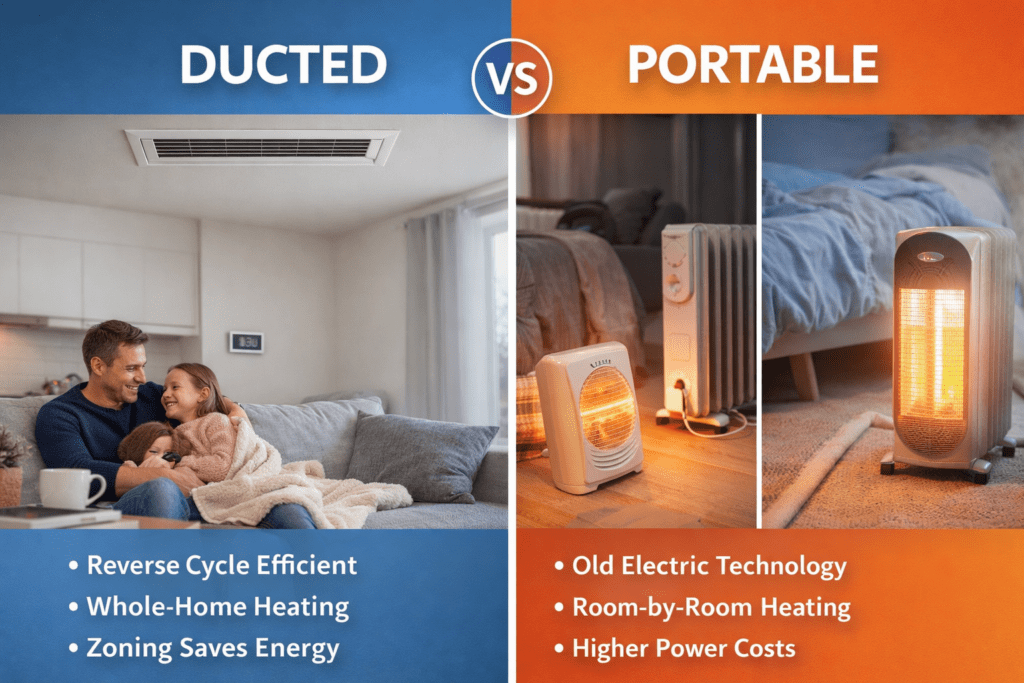
Ducted air conditioning systems use reverse cycle technology.
Instead of generating heat the way electric heaters do, reverse-cycle systems move heat from outside air into the home.
It might sound surprising, but even when the air outside feels cold, there is still heat energy present that the system can capture and move indoors.
Because of this process, reverse cycle air conditioners are widely recognised as one of the most energy-efficient ways to heat a home.
Portable heaters and bar heaters, on the other hand, simply generate heat using electricity. That means they typically use far more power to produce the same level of warmth.
So while a small heater might seem convenient, running several of them across a house during winter can quickly add up on the power bill.
Reverse cycle systems simply use energy more efficiently.
Even Heat Makes a Big Difference
Another factor that affects running costs is how heat moves through your home.
Portable heaters tend to warm only the immediate area around them.
You might have experienced it before: sitting close to the heater feels warm, but the rest of the room is still cold.
Because of this uneven heating, people often end up turning the heaters up higher or running several units at once.
Ducted air conditioning systems take a completely different approach.
They distribute warm air evenly throughout the home, so rooms heat more consistently and reach a comfortable temperature faster.
Instead of trying to warm small pockets of space, the system warms the entire house.
That balanced airflow reduces the need to constantly adjust heaters or run multiple devices.
Zoning Helps Reduce Energy Waste
One of the biggest advantages of modern ducted systems is zoning.
Zoning allows different areas of the home to be controlled separately.
So rather than heating the entire house at once, you can choose which rooms receive airflow.
For example:
• Living areas during the day
• Bedrooms in the evening
• Spare rooms turned off completely
This kind of flexibility helps reduce energy waste and keeps the system running efficiently.
It also means the system doesn’t need to push heat into rooms that aren’t being used.
When used properly, zoning can make a noticeable difference in how much energy a home uses during winter.
Portable Heaters Can Add Up Quickly
At first glance, portable heaters might seem like the cheaper option.
They’re easy to buy, simple to plug in, and often get used to solve a quick comfort problem.
But over time, they can create a situation where multiple heaters are running throughout the house.
One in the living room.
One in the bedroom.
Another in the kids’ room.
Each of those heaters draws electricity directly to generate heat.
That means running several heaters for long periods can quickly push energy usage above expectations.
Because ducted systems distribute heat throughout the home more evenly, they often reduce the need for those extra devices.
Instead of heating rooms individually, the system warms the home as a whole.
Long-Term Running Costs Matter
When people think about heating costs, they often focus on the immediate purchase price of equipment.
But the bigger picture is long-term running costs.
A well-designed ducted system is built to provide heating and cooling for the entire home across all seasons.
That means one system working year-round rather than several separate units being used at different times.
Over time, the efficiency of reverse cycle technology, combined with zoning and balanced airflow, can make ducted systems a far more economical option.
It’s also worth remembering that ducted systems provide both heating and cooling, meaning the same system handles summer comfort as well.
Kade